Curious about your favorite bird’s feathers? Ever gotten a feather ID with no proof? Want artistic references for a specific type of feather? This guide may be for you! Read on to learn how I source reference photos for all my feather-related needs.
Do you know the species of the feather you want to find?
If not, it’s time to do some exploratory research. Post on iNaturalist, a community ID group of your choice, or ask an expert. Certain types of feathers are well-represented in online resources; if it’s a large flight feather, browse collections like the Feather Atlas (mainland USA) or Featherbase (worldwide with specialization in Europe).
Nerdy sidebar—a standard Google Images search will rarely be helpful here. There’s too much unvetted (and these days, falsified) data. Here’s a very quick comparison between the image search results for a description of a European Goldfinch wing feather, and the exhibits you can find on Featherbase.
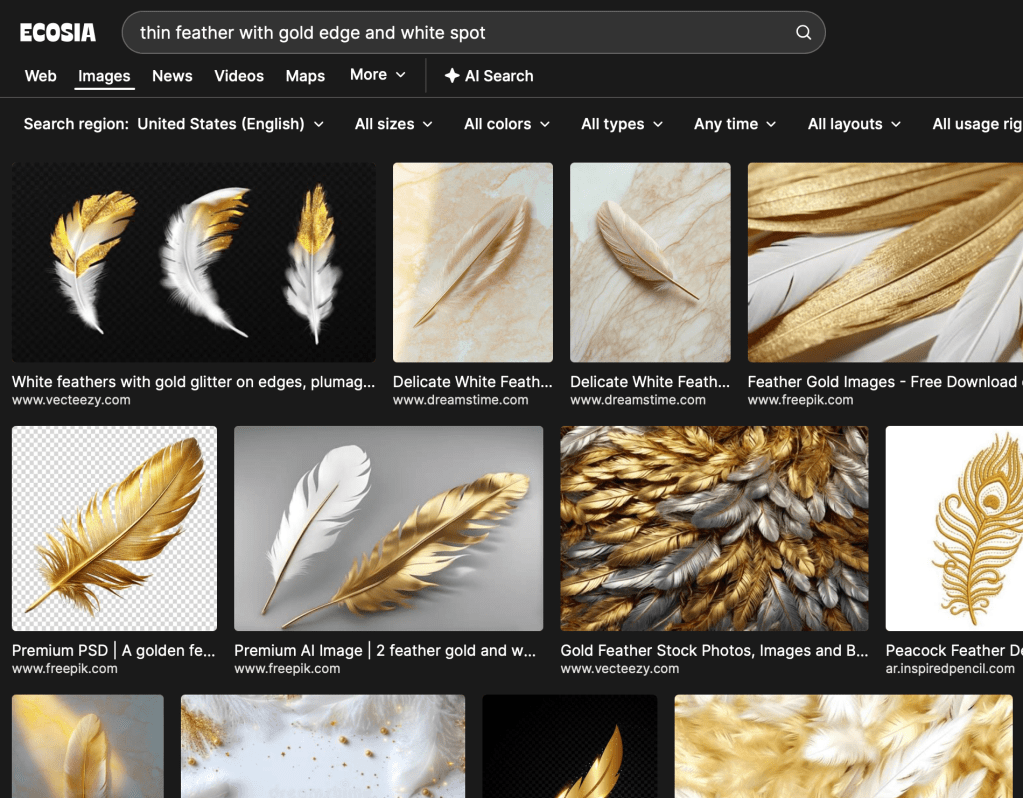
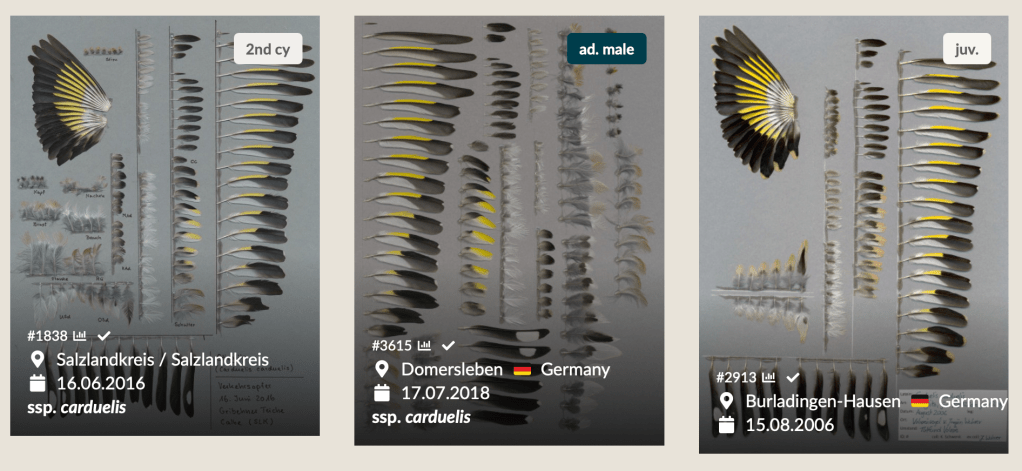
Ok—technically, it’s an Ecosia search, and I didn’t try very hard to make it work. But standard search engines appeal to general interests in a way that unfortunately alienates the niche of feather identification, at least at this time. If you’re truly curious about feathers, harness your passion and look at as many types of feathers as you can!
Do you know the placement of the feather?
If you know the part of the body your feather came from, pin down a placement name using the Cornell Lab of Ornithology’s bird anatomy tool. You’ll need to use this diagram for anything on the upper side of the wing.
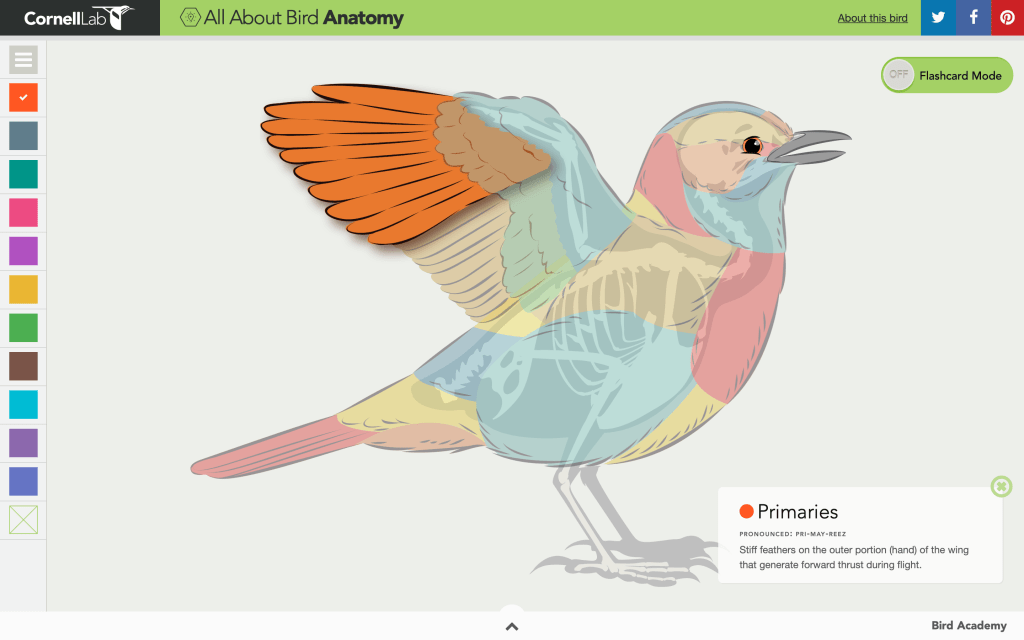
If you don’t know where the feather came from, it’s once again time to do some research via iNaturalist/community ID group/expert. The Feather Atlas offers a tutorial for typical flight feathers.
Have a species and a placement? Let’s go!
Once you have a species and a placement, head to my Feather Placement observation field guide on iNaturalist. Select the corresponding label, then narrow the resulting search page by species and any other filters you like. I usually select for Research Grade observations when I intend to share the results as reference material.
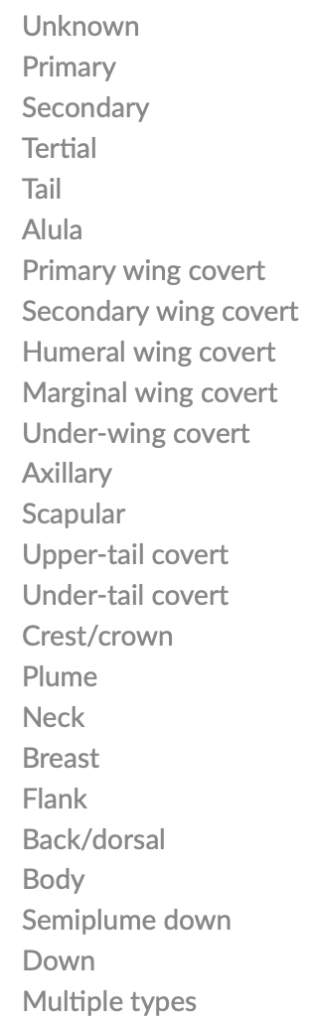
You may also wish to reference the allowed values for the Feather Placement field (pictured and linked at right). Read the descriptions if your placement doesn’t exactly fit any label listed, as the Cornell Lab’s tool and the observation fields are not matched 1:1.
No hits for your species and feather type? Try going broader–instead of Breast/Flank/Scapular/etc., use Body, and if all else fails, search the whole Found Feathers collection.
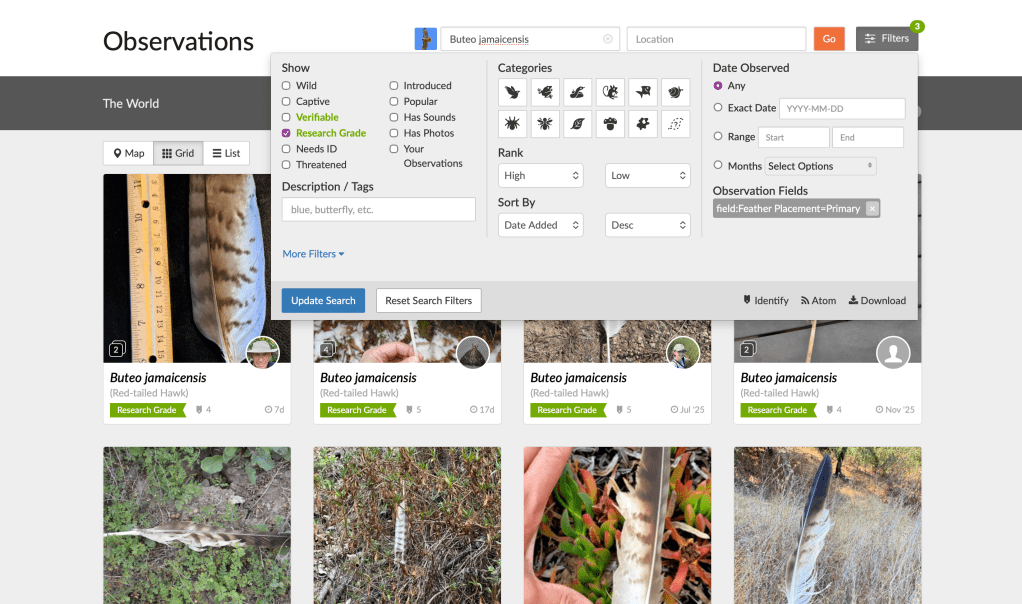
Once you have your search narrowed down to your liking, copy the link and share as needed! Here’s what this looks like in action:
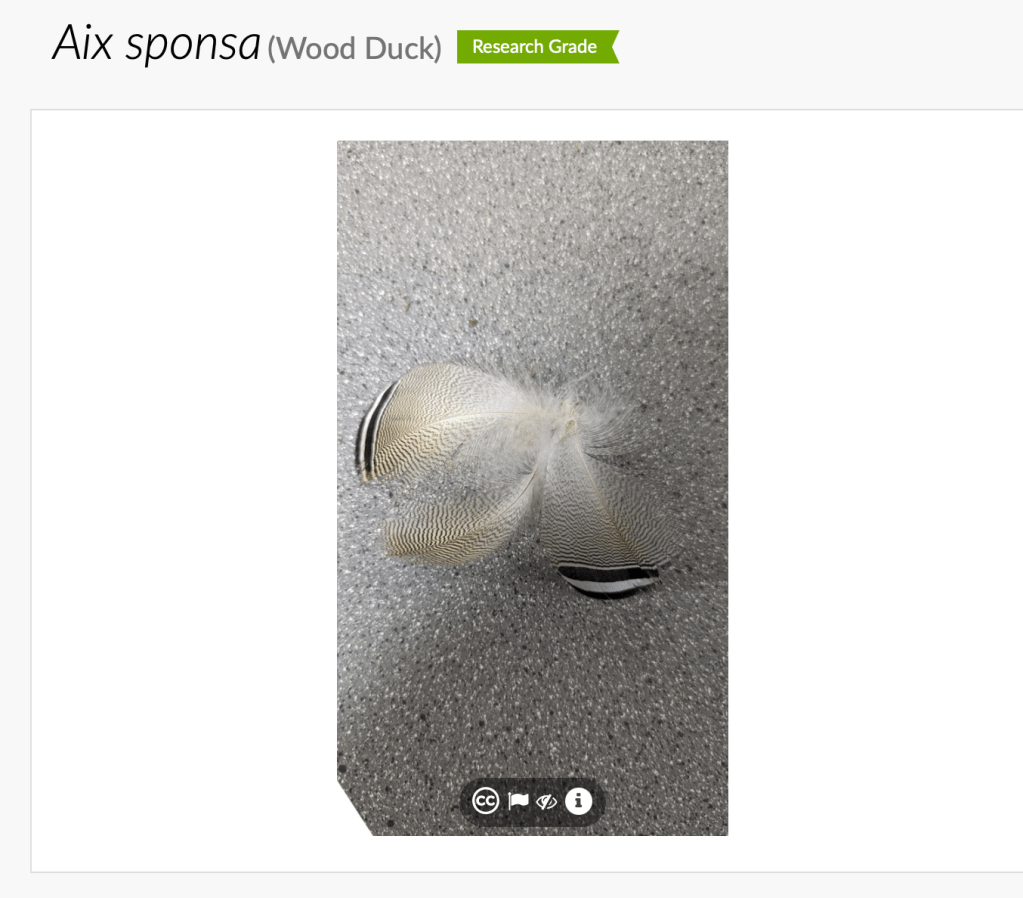
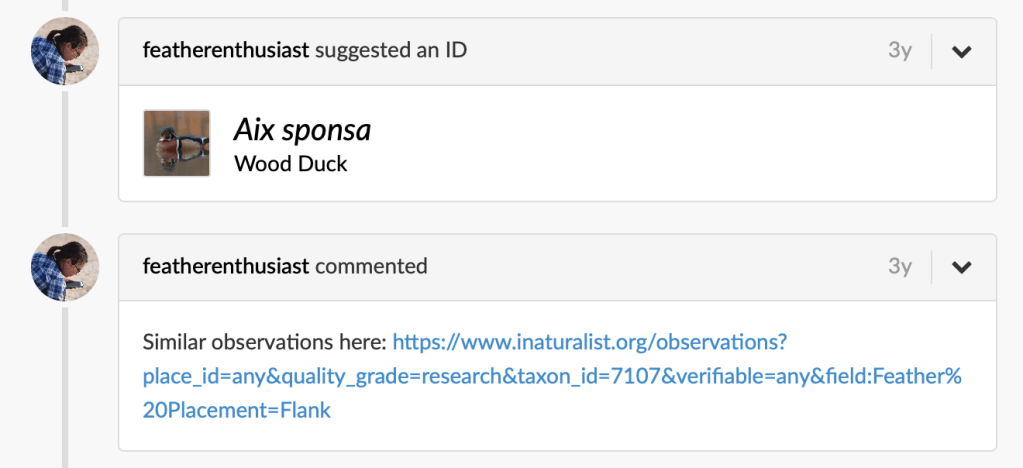

References with greater authority
Need something with more substantiation? Or, did you come up dry using the method above? While most resources cannot match the quantity and specificity of references returned via iNaturalist, the database is ultimately user-maintained and contains more than occasional inaccuracies. (If you’re knowledgeable enough to spot them, you are more than welcome to fix them!) Going back to researcher-vetted exhibits is important when you need the straight facts.
A list of these authoritative references may be found on my Resources page. But here are the ones I use most frequently as a primarily US-based identifier.
The Feather Atlas
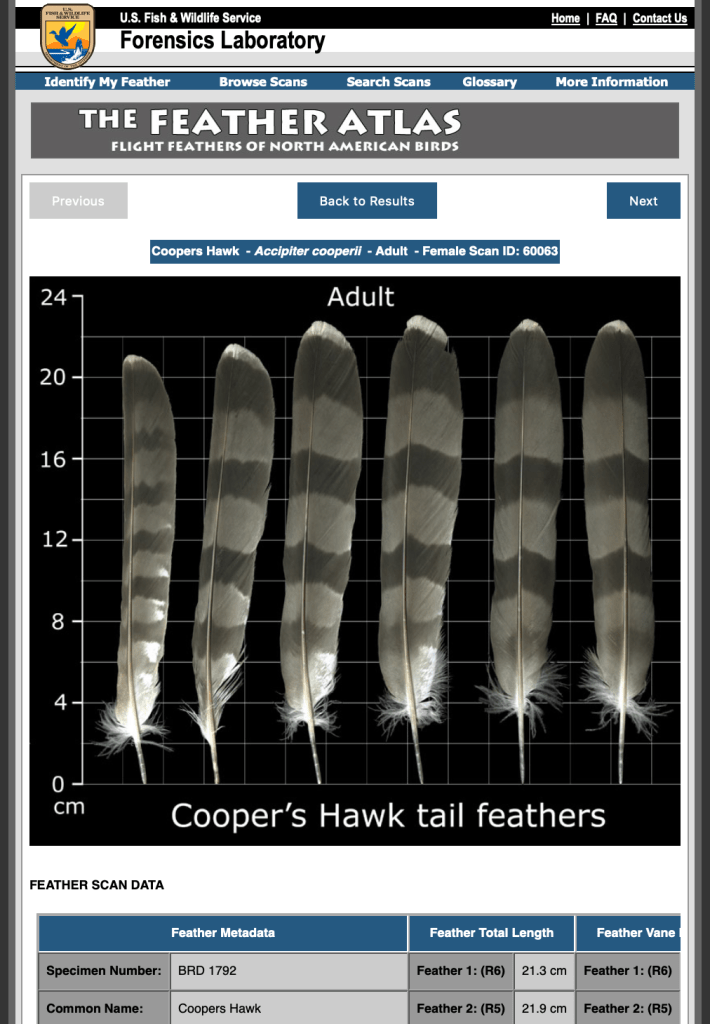
Great for wing and tail feathers of North American birds, with a primary focus on the continental USA.
Puget Sound Wing & Tail Image Collection
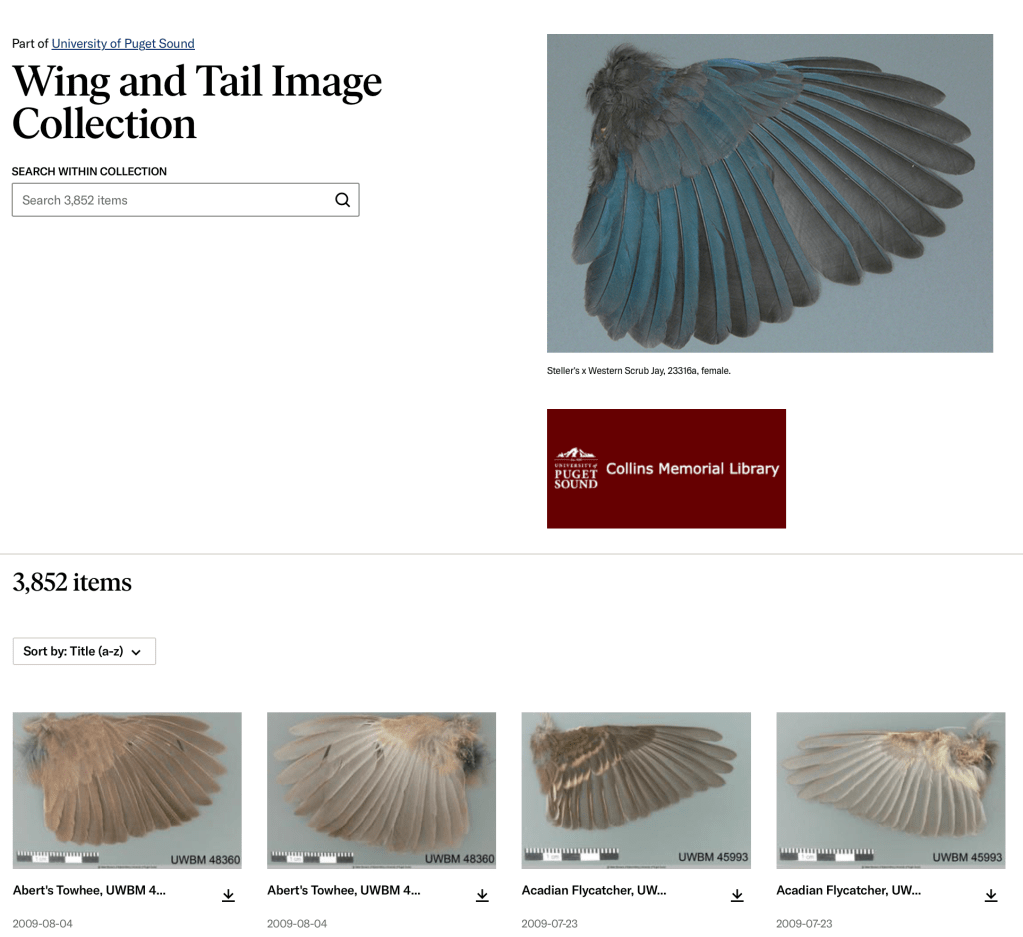
Excellent source for your North American full-wing reference needs. While it can be difficult to see individual feathers, it is unusually comprehensive for wing covert feathers.
Featherbase
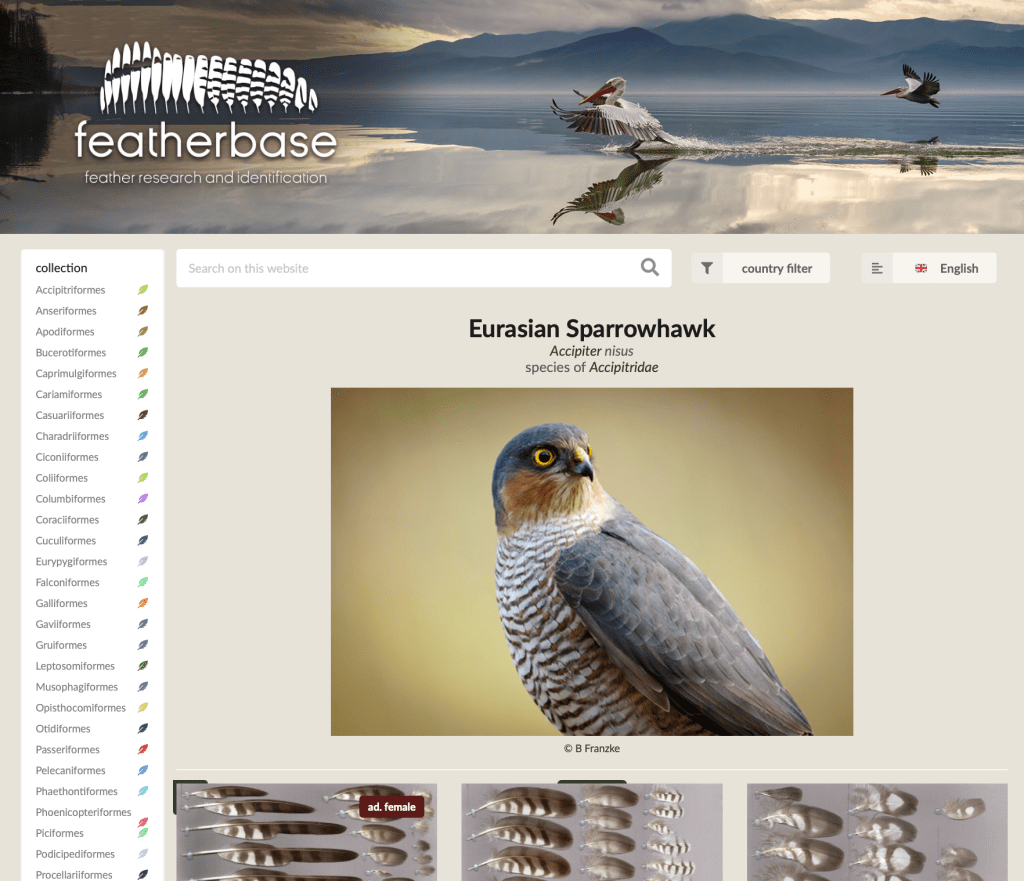
If I can’t find what I’m looking for anywhere else, Featherbase is where I go. If you’re located outside of North America, this may be the first place you look.
Exhibits include feathers from all over the bird. At minimum, you can expect the main wing and tail feathers, but the best plates include feathers from literally every part of the bird. Be advised that novice identifiers may need additional assistance in identifying which rows of feathers come from where.
I would like for this to be a living resource. If you have any questions, confusions, or proposed changes, please let me know in the comments.
 Found Feathers